The product was not a generic family chat app. Grandy had to model a real family network: grandparents as members, parents and grandchildren as participants, and care contacts with narrower access to care notes, profiles, and calendar requests.
2018 to 2019 · San Francisco, California
Grandy
Founding engineer
As a founding engineer at Grandy, I helped build a consumer product and service layer for keeping grandparents, parents, children, and care contacts connected through private family spaces, shared calendars, video visits, games, interviews, rewards, and patient onboarding.
Family product logic
The archived product specs describe private member spaces where families could upload text, image, and video messages; comment; mark messages as loved; request or add calendar entries; invite participants and care contacts; and coordinate family, care, activity, and all-calendar views.
I worked across the real product surface behind that model: React web app, Python backend API, admin tooling, public signup flow, React Native mobile app, payments, invitation flows, notifications, surveys, games, video visits, life-story interviews, rewards, and appointment scheduling.
I helped pair the software with assisted onboarding and phone support, because the product only worked if grandparents could get started calmly and families could trust the next interaction would be easy.
Family graph
Three audiences, one private family space.
The hard product decision was to avoid a one-size-fits-all interface. Grandy needed different paths for the person receiving care, the relatives trying to show up, and the support circle helping around daily life.
Member
Grandparent
A calmer home base for messages, loved moments, calendar plans, video visits, interviews, and setup support.
Participant
Parent or child
A lighter path to show up: upload media, request dates, play, interview, keep streaks, and help manage the family space.
Care contact
Support circle
Narrower access for care notes, care calendars, profile details, invitations, and requests around the grandparent's day.
Private family feed
Text, image, video, comments, loved messages, unread states, and reminders kept family contact from fading quietly.
Shared calendar
Family, care, activity, and all-calendar views connected requests, approvals, visits, special occasions, and today plans.
Connection rituals
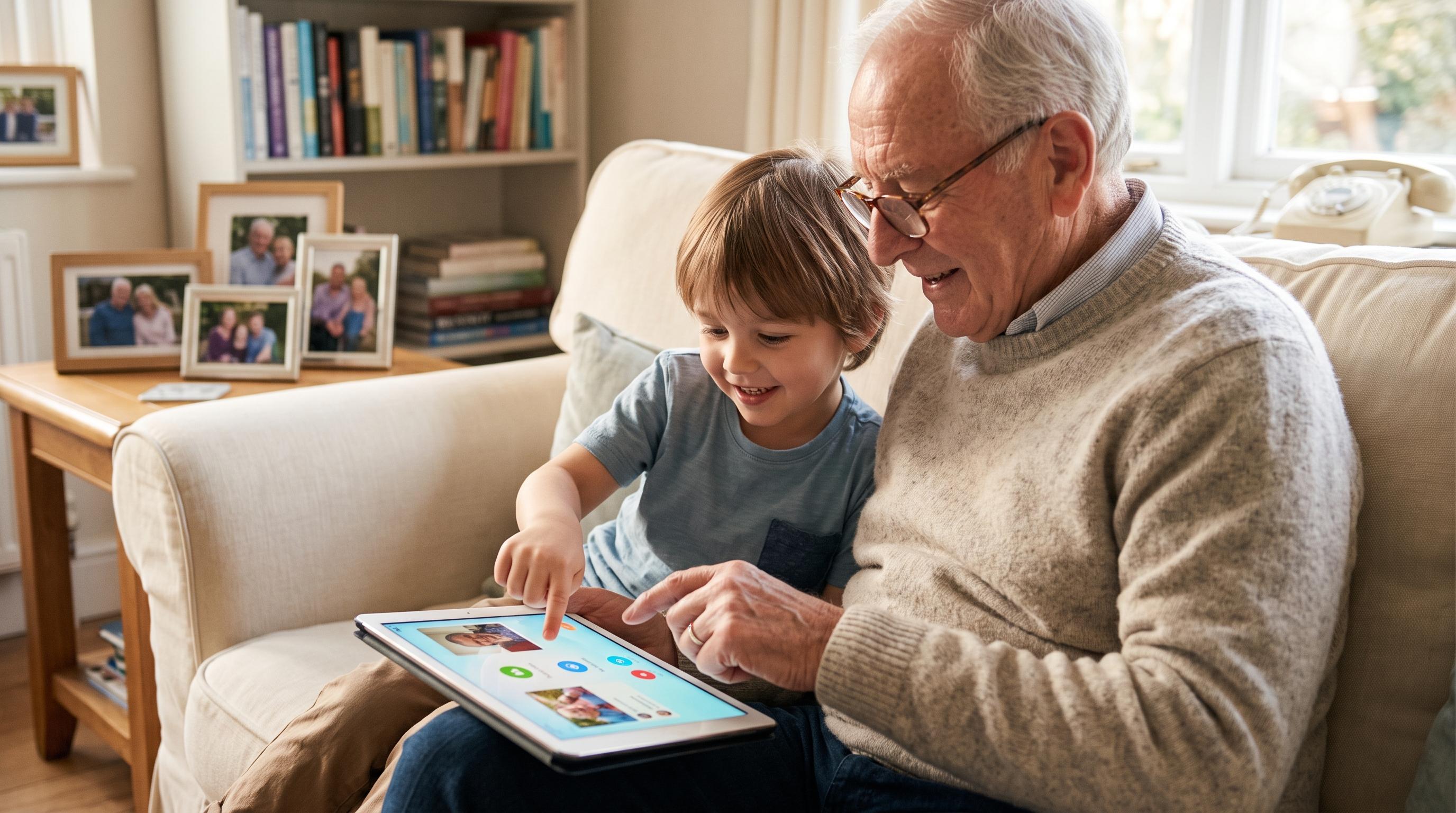
Video visits, Drop Four, life-story interviews, streaks, badges, gift lists, and a love-tank metaphor gave younger users reasons to return.
Assisted setup
Phone onboarding, in-home appointments, service-area checks, support contacts, and admin tools made the product usable for older adults.
What I built
Role-aware family graph
I helped build the account model, signup flows, invitations, pending profiles, permissions, and family membership states around three audiences: members, participants, and care contacts. Each group needed a different interface and a different level of access.
Private family feed and calendar
The core product connected message feeds, media uploads, comments, loved messages, calendar entries, calendar requests, today plans, profile pages, and care-contact directories so families could coordinate around one private space.
Connection rituals, not just features
I worked on the softer mechanisms that made participation more likely: video visits, a shared game, life-story interviews, message streaks, a love-tank metaphor, badges, gift lists, reminders, and tutorial flows for grandparents, parents, and children.
Operational backbone
The build connected the visible family product to backend services for authentication, family data, profiles, subscriptions, co-payor invitations, Stripe payments, Twilio video tokens, Firebase Cloud Messaging, SendGrid emails, text reminders, scheduled tasks, and admin support.
Support as product design
The public pricing and product specs treated telephone onboarding, family concierge support, appointment scheduling, and in-home setup as part of the product. That shaped the engineering: service-area checks, appointment slots, reminders, support contacts, and admin workflows mattered as much as the app screens.
Product signals
Roles
3 family roles
Surfaces
Web + backend + admin + mobile
Setup
Phone and in-home support
Evidence notes
I keep these provenance cues here so the page stays specific without pretending every private archive is public proof.
- Legacy Grandie and Grandy repositories
- Archived feature specs and page specs
- Backend API route map
- Local Git history across web app, backend, admin, and mobile projects
- Archived public product copy